

The B-Side of Birmingham:
A Lost History of Recording Studios in the Magic City, 1960s - 1980s
by Travis Morgan

Recording console at Polymusic
At one time in the late 1970s, seven active recording studios of various sizes existed in Birmingham, Alabama. Though I was born in 1980, grew up in Birmingham, and am a huge lover of music and of my native city, I only recently discovered this history.
Through interviews with musicians, engineers, and studio owners involved in Birmingham’s recording industry, I have sought to contextualize what it meant both for music and the city to have so many recording spaces in Birmingham used to record original music for decades. Though Birmingham was never at the center of a scene producing hit records, its studios impacted music and musicians in significant ways that rippled well beyond the city.
In the late twentieth century, Birmingham may have been more recognized for music used in advertisements on TV and radio than for original music recorded in the city. Advertising money was the bread and butter - literally the grease that ran the tape machines and kept the lights on - for local recording studios. Yet, recording engineers and producers often enjoyed working on projects with bands and performing artists more than the ads, as evidenced in my conversations with them.
Although jingles (short songs used in commercials) paid the studio bills in most cases, after hours is when the real magic happened. Recording studios provided a much-needed platform for local musicians, bands, and songwriters to hone their craft and to grow artistically through collaboration, exchange, and self-expression.
While my research focuses on the 1960s-1980s, recording studios existed before and after this period, many of which began in small spaces. Ken Shackleford started a studio out of his home in Roebuck. Ed Boutwell started his studio in his mother's basement in Homewood. Eric and Eugene Bates started recording out of their house in Fairfield. Mark Harrelson, who recorded under Kudzu Productions, started producing records in the basement of his Crestwood home. And Neal Hemphill started Hemphill Studio (later The Sound of Birmingham) in the basement of his plumbing shop in Midfield.
Later, some of these studios relocated to gain space. However, there is something special about the limitations of a smaller, more DIY recording space, as reflected in the rising popularity of home studios today.

Ed Boutwell and
Roszetta Johnson,
Boutwell Studios
in English Village
Thrasher Brothers at Prestige Productions Recording Studio


Prestige Productions Recording Studio
Many of the recording studios in Birmingham made money by producing jingles for advertising campaigns and would offer affordable prices to artists with whom they were excited to work. Studio owners wanted to create and be a part of something meaningful: recording artists and bands who were laying down original material. Though this arrangement is certainly not unique to Birmingham, the city’s recording studio story has not been fully explored, thus locals have not had the chance to celebrate this part of its music culture. I hope this article shines a much-needed light on this overlooked history.
Recording studios are an outlet for creators, engineers, producers, technicians, musicians, and singers. Though musicians and singers often get the most attention, the people “behind the board” are just as crucial in making the magic happen.
Gaston Nichols, a local audio engineer and technician, has been involved with installation and engineering processes for recording studios in Birmingham (and beyond) for decades, including with Unity Recording Company, Prestige, Boutwell, The Sound of Birmingham, The Music Place, Solid Rock Recording Co., Front Row Productions, and several home recording studios, among others. He recalled getting into engineering “from a backwards standpoint . . . I first learned and was able to find work building equipment and installing studios. Every time, I would have to do a few sessions to make sure everything worked. That’s how I got into engineering.”
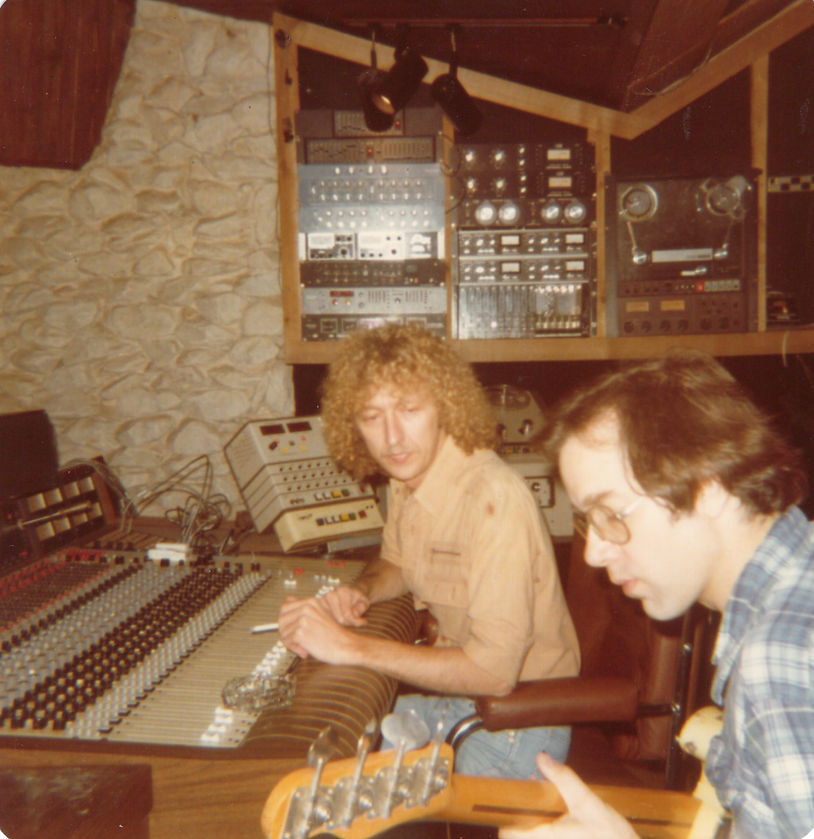
Gaston Nichols and Tommy Stuart, Boutwell Studios on 23rd Street
Nichols worked on many projects, including Frederick Knight, Backwater, Buddy Causey, The Rubberband, Cleveland Eaton, Rev. Fred Lane, and Karnival Season. In the early 1980s, he trained Becky Seaney as an audio technician and she also worked at Boutwell, Prestige, Solid Rock and Front Row. The two eventually married and later moved to Maine, continuing to work in the business.
While Nichols is a major throughline among some of Birmingham’s most well-known studios, other technicians also passed through the halls of these local places, making significant contributions to the music and the city’s musical legacy.
By the 1960s, Homer Milam’s Artists Recording Studio had been in operation for several years. First located on 1st Avenue North above Britling Cafeteria (a local spot that took its name from an H. G. Wells novel), the studio eventually moved to a house in Woodlawn. Milam founded the record labels Reed and Arlington to disseminate his recordings to local and regional radio, working with artists that included Paul Ballenger (who would later form Sunalee Publishing with Eddie Hinton), Dinky Harris & Jerry Woodard (both of The Esquires), Lawrence Shaul (later of Dennis Yost & the Classics IV), and Larry and the Loafers (who had the regional hit “Panama City Blues”).
Recording studios provided a much-needed platform for local musicians, bands, and songwriters to hone their craft and to grow artistically through collaboration, exchange, and self-expression.
Ken Shackleford started a studio in his living room in Roebuck in the late 1950s. Charlie Colvin had a studio in North Alabama at that time, then moved to Birmingham. In the early 1960s, Colvin and Shackleford teamed up to form Heart Recording Company, located above a blood bank on Third Avenue North. Rent was cheap, and locals often joked that the blood bank gave Heart its power. Heart’s key engineer was Glen Layne, who had worked out of Shackleford's home studio and played saxophone on local legend Baker Knight's recordings on the Decca label. Colvin is also credited with introducing local singer Tammy Wynette to the industry in Nashville. As local singer Gary Putman noted, “Tammy worked in the beauty shop in Midfield near The Sound of Birmingham,” then left for Nashville in 1966.
In 1961, Ed Boutwell started what would become Boutwell Studios in his mother's basement on Dixon Avenue in Homewood, then moved the studio to English Village a few years later. Mark Harrelson recalled that “Ed had been working as radio engineer with Channel 13 producing jingles and started getting more work on the side.”
Also in the early 1960s, Al Hambric moved his studio from Jasper, Alabama to downtown Homewood, calling it Alabama Sound Studio. Hambric was a songwriter and owned a label called Frontier Records. After a few years, he moved operations to Nashville, but that same space would continue to be used for recording.
In the 1950s, popular styles recorded in Birmingham studios included country, blues, rockabilly, and later rock and roll, but by the 1960s, Soul, R&B, and the British invasion had a stronghold. When the Beatles performed on The Ed Sullivan Show in 1964, they inspired a boom of new garage bands everywhere, including countless bands from Birmingham and the surrounding region. Many of these local bands were eager to record and Birmingham’s recording studios offered that platform, providing new bands with experience and access to space and equipment for recording.

Becky Shirley and
Gaston Nichols
at the board of Merry
Oakes Recording
Company in Riverside,
Alabama, 1981


Becky Shirley at Prestige board; Dillard J. Hays album, Prestige Productions


Lolly Lee and Alice Bargeron at Boutwell Studios (Photos by Keith Harrelson)
In the 1960s, Birmingham studio owners and producers pressed records on 45s (7-inch vinyl) and promoted them to radio stations in hopes of securing wider acclaim. Local records could be heard on local stations like WVOK, WENN, WYDE, WSGN, and local DJs (disc jockeys) played a pivotal role in which songs got spins. Many DJs were involved in other music ventures as well, including recording studios, music production, concert promotion, and even record stores. DJs had sway and recording studios sought their support; getting airplay helped to show musicians that working in recording studios could expand their reach.
In the early 1960s, Colvin and Shackleford teamed up to form
Heart Recording Company, located above a blood bank on
Third Avenue North. Rent was cheap, and locals often joked
that the blood bank gave Heart its power.
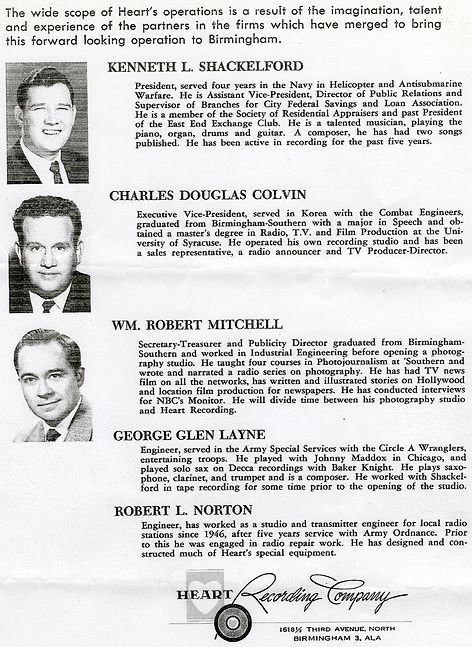

Heart Recording Company marketing materials


Local record stores and head shops also stocked local records which supported the production of local music and the studios that created it. These included Rumore’s Record Rack, Oz Records, Medusa Sound, Charlemagne Record Exchange, Angry Revolt, The Cornerstone, Odyssey, Ruminating Records, Wide World of Music, Wuxtry, Village Records, and Magic Platter, among others.
In 1964, Rick Maze of the Maze Corporation (a local broadcasting and recording equipment reseller) and bassist and songwriter Kenny Wallis moved into Hambric’s former building to establish Prestige Productions, both a recording studio and a label. Prestige made its money in gospel and country, but frequently recorded rock and roll bands and other styles. One of the more recognizable acts that frequented Prestige was the Thrasher Brothers: a gospel-turned country band that was eventually awarded five Grammys. Other locals who recorded at Prestige included The Echos, This Side Up (who cut a 45 for Capitol Records), The So...But So What? (later changed to Revolver), Dillard J. Hays, and Roger Hallmark (who later signed with Stax subsidiary Enterprise). Wallis is credited with playing on nearly 200 records at Prestige.
In 1967, Bob Grove, who had been working with Ed Boutwell, decided to open his own recording studio. He purchased the building that formerly housed Milam's Woodlawn studio and named it United Recording Company & Productions. About the studio, Gaston Nichols recalled, “I remember them bragging that the entire studio was covered in carpet - that you could walk barefoot through the whole place.”
Candi Staton credited Bob Grove with discovering her singing in Birmingham and first giving her the opportunity to record. After Grove gave Staton her first big break, she linked up with Rick Hall of FAME Studios in Florence, Alabama. Grove was involved with two record labels, Unity Records and Chantain, and also connected with two experienced music professionals out of Tennessee: songwriter John Hurley (who worked with Aretha Franklin) and engineer Ernie Winfrey (who worked with Paul McCartney); both worked out of Grove’s Birmingham studio for some time.

Ed Boutwell

Frederick Knight (Photo by Chris McNair, courtesy of the McNair family)

Inside
Prestige
Productions
Lawrence Bryant, a partner in United Recording Company, noted that the studio had three sets of studio musicians. One was Cold Grits, “a white funk band from Baton Rouge, Louisiana” that had moved to Birmingham. After hearing that Jerry Wexler from Atlantic Records was working in Muscle Shoals, the band auditioned for him and was hired as the studio band for the famed Criteria Studios in Miami, Florida. Two members of Cold Grits, drummer Tubby Ziegler and bassist Harold Cowart, went on to play with the Bee Gees.
The second studio band featured Chuck Leavell on keys (who played with the Allman Brothers Band during their heyday and currently plays with the Rolling Stones), Charlie Hayward on bass (who later became a regular session player at Capricorn Studios in Macon, Georgia and played with the Charlie Daniels Band), Lou Mullenix on drums, and Joe Rudd on guitar. The third studio band comprised members of local band The Vikings, including Wayne Perkins on guitar, Charles Nettles on guitar, Steve Vainrib on drums, and Randy Carmichael (who later toured with Bobby Womack) on bass.
A local band called Train, featuring Dale Karrh (The Premiers) on guitar, Jasper Guarino on drums, and guitarist Robert Alexander (from The Distortions and later The Renaissance Ensemble), also often recorded out of the studio. Vocalist Mike Gunnels (from The Hard Times) gigged with Train and worked out of the studio as well. In 1969, Guarino left Birmingham to work for Quin Ivy’s Quinvy Studio, cutting records for Swamp Dogg and Percy Sledge. He was also responsible for recruiting Wayne Perkins to the Shoals. Perkins (also of Alabama Power/Crimson Tide bands and Smith Perkins Smith) went on to become a prominent session player on sessions for Joni Mitchell, Bob Marley, and The Rolling Stones.
“I remember them bragging that the entire studio
was covered in carpet — that you could walk barefoot
through the whole place.”
GASTON NICHOLS ON UNITED RECORDING COMPANY & PRODUCTIONS
One of the records released on Unity Records was Candi Staton, which credited producers Bob Grove and Richard Dingler. Dingler had recently founded Southeastern Attractions, a local booking agency representing much of the area’s best talent, and would soon found Peace Concerts, arguably the most reputable concert promotions company in Birmingham until Tony Ruffino moved his Ruffino-Vaughn enterprises to the city. Dingler was, like many local studio owners and engineers, a huge cheerleader for local bands and original music.
Around 1966, Neal Hemphill, a local plumber, opened Hemphill Studio in the basement of his plumbing shop in Birmingham’s Midfield neighborhood. According to one of Birmingham’s most prominent session drummers, Ed Massey, “the original Hemphill Studio was a tiny little place.” Hemphill recorded his brother’s gospel quartet there, but soon got the itch to record Soul and R&B.
A year or two later, Hemphill relocated his studio to a separate two-level building about fifty feet away from the plumbing shop and renamed it The Sound of Birmingham. He then cut records for dozens of up-and-coming Soul acts in the region, including Frederick Knight, Sam Dees, Ralph “Soul” Jackson, Roscoe Robinson, Sam Frazier, David Sea, and Cold Grits. Frederick Knight would go on to sign with Stax Records and release the gold record I’ve Been Lonely For So Long. Knight’s tunes have been cut by artists such as Marlena Shaw, Anita Ward, Ry Cooder, Leonard Cohen, and Lambchop, popularly called “Nashville’s most fucked up country band.” Ralph Jackson cut records for Atlantic and later Rabbit Factory. David Sea cut for Atlantic and replaced Dennis Edwards in The Temptations. Sam Dees went on to cut records with Atlantic, Chess, and Kent.


Left: Recording Session at Boutwell (Photo by Keith Harrelson);
Right: Wayne Perkins at Boutwell Studios (Photo by Mark Harrelson)
The original session players at The Sound of Birmingham were Dale Karrh on guitar, Philip Stratton on keys, Randy Carmichael on bass, and Ed Massey (The Tynsions) on drums. In 1970, guitarist Glen Wood was brought on as a session guitarist, and along with Ed Massey and Randy Carmichael, the three became the regular session players for the next few years. Mike Dulin (who trained at Juilliard and Birmingham-Southern College) was a prominent musician hired as a session piano player, and the studio also had a string of keyboard players including Ray Reach, David Broom, Tom Broom, and Marc Phillips.
The Sound of Birmingham also had an arrangement with Atlanta music publisher Bill Lowery and worked to get hits out of Glen Wood, Bob Montgomery, Gary Putman, Don Tinsley, Roger Hallmark, Buddy Causey, and others. Glen Wood cut a couple of sides for MGM South and Buddy Causey cut records for Capitol and Quinvy.
In 1968, a new recording studio was built out of the old ice house on Oxmoor Road in Homewood. It was called New London Recording Center and was owned by the Matos family. The studio started out with a 12-track board, later upgrading to a 16-track board, and was in operation for a decade before changing names. It was a hub for artists that included Sam Dees, C. L. Blast, Roszetta Johnson, and Black Haze Express, all of whom were associated with the Clintone label run by Clinton Moon and entrepreneur/publisher Jesse Lewis. Other artists who cut records at New London included Marcia Waldorf (Capricorn), George Law (Bongwater), and Randy Richards (A & M). Session players included the local jazz fusion outfit Backwater (originally from Mobile).
Boutwell Studios changed locations several times through the years, moving from English Village to an old church (near Sloss Furnaces) and back to English Village where Don Mosley worked as an engineer. Mosley was a local DJ (aka Don Martin) on the big radio station, WSGN. As one of the go-to engineers for local bands in the garage band era and through his long career that followed, Ed Boutwell likely recorded with more Birmingham bands than anyone. Some of these included The Vikings, The Distortions, The Hard Times, and Days of the Week. Each of these bands featured members who vitally impacted music, and Boutwell recorded with soul artists as well, including Roszetta Johnson.
Recording studios continued to thrive and expand in Birmingham through the 1970s and 1980s. In the early 70s, Noah White and Charles Harnach opened Solid Rock Recording in Centerpoint. Harnach would work with other studios as well, including Boutwell and Bates Brothers. By 1974, Nat Andrews had opened a demo studio called Studio A in Five Points South (southwest corner, second level) that was active for several years. Prolific singer/songwriter Steve Sedberry recalled doing “a five-song demo” with Andrews.


Top: Drummer Ed Massey; Gaston Nichols and Glen Wood, Boutwell Studios; Address label for 45s for Glen Wood's project: Suitcase

Back cover of Backwater album showcasing exterior of New London Recording Center
In 1974, Don Mosley bought The Sound of Birmingham from Hemphill, and by 1976 had moved the studio to the Forest Park/Avondale area, where he has cut sessions and jingles for the past 49 years. It is now one of the longest running Alabama studios in the same location. Original projects at the studio have included Moonpie, The Vybrashons, and several other records for the local Lanark record label.

Don Mosley, Boutwell Studios in English Village
Circa 1975, Glen Wood left The Sound of Birmingham and partnered with Ed Boutwell to form Boutwell-Wood Studios, active until 1981. Wood had a particular interest in recording original music and was known to convince people to invest in his projects. He frequently collaborated with artists like vocalist Kathy Burdick and songwriter Randy Cone, and had high hopes for his own material as well. He also often worked with bass player Alison Prestwood (currently with Peter Frampton) and trained Tony Wachter, an experienced vocalist who previously performed with The Homestead Act and worked as an engineer with Boutwell Studios for several years.
In 1978, New London Recording Center changed its name to The Music Place, updating its equipment and calling itself “One of America’s Finest Recording Facilities.” Nichols noted, “They were far ahead with a Neve board and Studer tape machine - state of the art at that point. As good as you could get.” Active producers and engineers included Tom Nist (Marvin Gaye, Talking Heads), Mike Guerra (Grace Slick, Barbra Streisand), Mike Matos (Eddie Kendricks, The Mortals), Jerry Masters (Paul Simon, Wilson Pickett), Gaston Nichols, Johnny Sandlin (Allman Brothers, Widespread Panic), and Paul Hornsby (Duane Allman, Tim Hardin).
In 1979, Mark Harrelson, who had been running live sound with touring bands, opened a recording studio in his basement in Crestwood and called it Kudzu Productions. He famously cut the demos for Mike Duke (Wet Willie), two of which were recorded by Huey Lewis and the News and became major hits. Harrelson also recorded a slew of other local and regional artists in the basement studio including Revolver, The Invaders, Jim Bob & The Leisure Suits, Don Tinsley, Jimmy Hall, Telluride, and Ned Mudd.
Also in 1979, brothers Eric and Eugene Bates started Bates Brothers Recording in their Fairfield home. “We started in the house in a few of the bedrooms and then moved to a building in the backyard,” Eric recalled. “We actually called it ‘Backyard Studios’ for maybe a day, then went with Bates Brothers Recording.”
Also in 1979, Michael Panepento (Eddie Kendricks, Temptations), Randy Hunter, and Dan Whiteside opened Polymusic Recording Studio on West Oxmoor Circle in Homewood, where they remained until taking over Prestige's spot in downtown Homewood in 1991.
“They were far ahead with a Neve board and Studer tape machine — state of the art at that point. As good as you could get.”
GASTON NICHOLS ON THE MUSIC PLACE
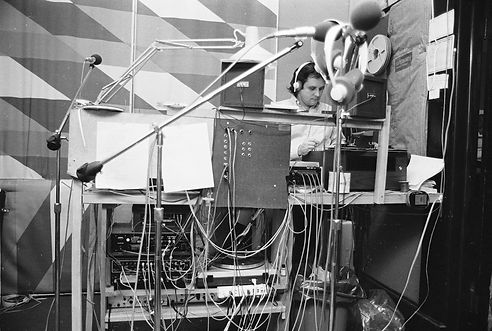
Nat Andrews at Studio A in Five Points South (Photo by Keith Harrelson)


Jim Bob and the Leisure Suits with engineer Andy Bray (center), Polymusic Studio (Photo by Robin McDonald)
In 1982, Frank Pigott opened a studio called The Kitchen Sync in the Edgewood neighborhood of Homewood that attracted local punk rock bands. He remained in this location until 1986 when he moved the studio to Woodlawn and renamed it Studio Six. Pigott frequently worked with The Primitons, including mainstays Mats Roden and Leif Bondarenko (who were also members of Jim Bob & The Leisure Suits and the Sugar LaLas).
In 1983, Mark Harrelson became a partner with Boutwell Studios, where he remains as co-owner and engineer. He has recorded with Eddie Hinton, Wayne Perkins, Telluride, Taj Mahal, and Greg Allman, and has worked with David Hood, Johnny Sandlin, Jack Pearson, and Chuck Leavell.
In 1985, Bates Brothers Recording moved their studio to Hueytown where they're still actively record today. They recorded Palace Music's (Will Oldham) Viva Last Blues and have worked with Eric Essix, The Controllers, and countless others.
In January 1989, guitarist Ross Roberts from the bands Rainwater, Black Mountain, and later Dick's Hat Band, moved his Jasper studio to #4 55 Place South in Woodlawn, where he and partners Betsy Simmons, Scott McDavid, and Tony Wachter opened Front Row Productions. Roberts would later found Vent Records, a label focused on southern blues, and work with Topper Price & The Upsetters and Lost in the Mail.
Studio 6 (#6 55 Place South) was right next door to Front Row, which made two operating recording studios right next door to each other for seventeen years in Woodlawn. Roberts later changed Front Row’s name to Audiostate 55, which was later purchased by Dr. Henry Panion, a local grammy-winning gospel music producer and composer.Though often unknown and underappreciated, Birmingham’s recording studios from the 1960s through the 1980s were a hub of activity, providing a critical framework, seeding ground for artistic exchange and expression, and career launchpad for artists and engineers alike.

Studio 6 in Woodlawn


Mark Harrelson at Kudzu, the production studio he opened in his Crestwood basement in 1979; Dan Whiteside building Polymusic Studio, original location
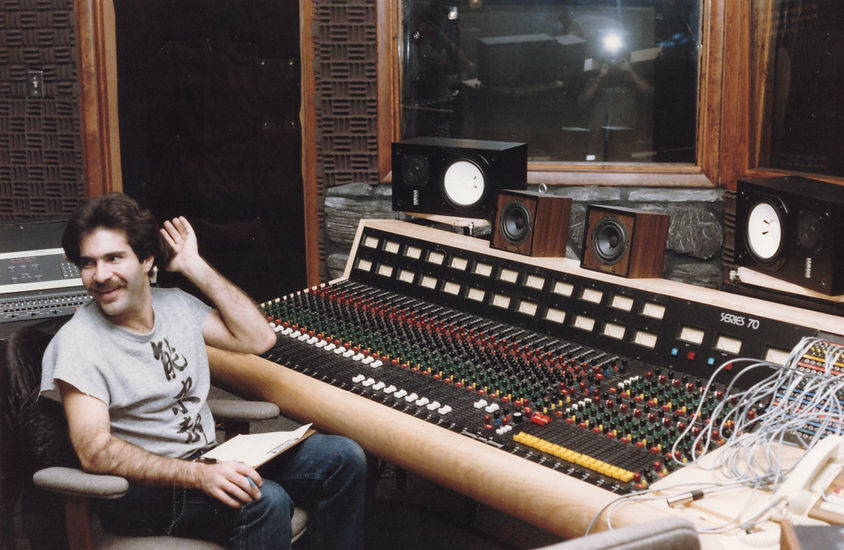
Michael Panepento at Polymusic
Through these studios, Birmingham became a training ground for music lovers where countless individuals learned to record and become skilled, professional musicians and technicians. Local recording studios provided access to expertise, infrastructure, and experiential opportunities that acted as a springboard for many artists who went on to build productive careers in music
Yet, because much of the development, innovation, and exposure that propelled these musicians forward happened behind the scenes, through the foundational and supportive role of recording studios, Birmingham has not received proper credit for its widespread and myriad influences on music. Engineers and producers like Ed Boutwell, Homer Milam, Neal Hemphill, Frederick Knight, Kenny Wallis, Mark Harrelson, Gaston Nichols, Sam Dees, Bob Grove and Glen Wood each had a driving spirit and vision, and their efforts impacted Birmingham and beyond in ways we are just beginning to measure
Lastly, in addition to the well-known music and musicians grown in these studios, there are countless recordings made in Birmingham that never found a label or a vehicle to release them. So much of the recorded material I’ve stumbled upon is praiseworthy, and I hope one day, people will finally be able to hear it.

Don Tinsley at Sound of Birmingham (Photo by John Spicer)
Birmingham’s recording studios from the 1960s through the 1980s were a hub of activity, providing a critical framework, seeding ground for artistic exchange and expression, and career launchpad for artists and engineers alike.
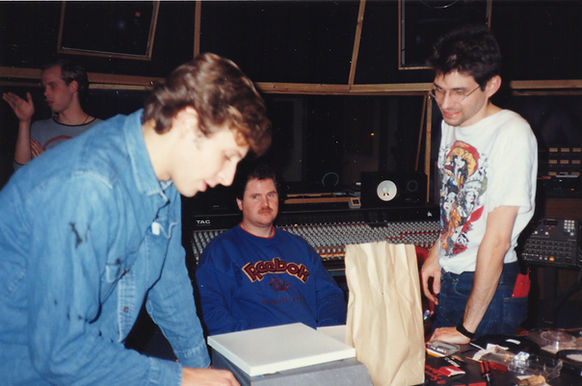
Left: Will Oldham, Paul Oldham, Eric Bates, Steve Albini at Bates Brothers, Hueytown
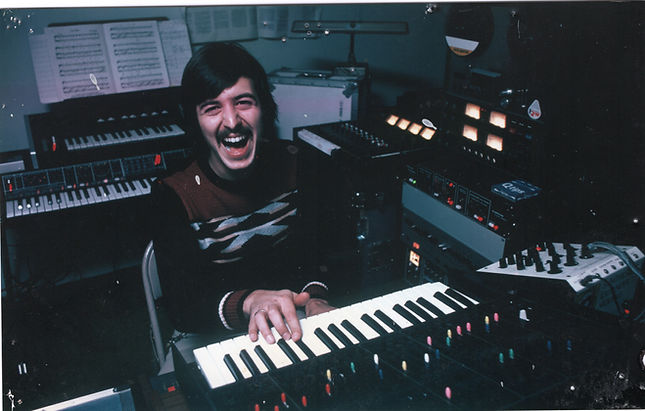
Below: Clockwise from top Left: Acetate record from Heart Recording Company; Tony Wachter, Boutwell Studios (Photo by Keith Harrelson); Dan Whiteside, Polymusic Studio; Vernon Reeves at The Sound of Birmingham


Original article published by Alabama Folklife Association in Tributaries Issue #19 and can be purchased online here.